
Fire Engineering
Innovating Fire Safety, Building for the Future.
Future of Fire Safety
At Osborn Associates, we believe that successful fire engineering goes beyond technical solutions - it’s about making a positive and lasting impact on the safety and well-being of the people and communities we serve. We understand the importance of designing systems that not only meet compliance requirements but also enhance the overall protection of buildings and their occupants.
Our approach is guided by two essential principles: Innovation and Responsibility. Through these, we create fire engineering solutions that are not only effective but also forward-thinking, sustainable, and aligned with the unique needs of each project. We recognise that our responsibility extends beyond simply providing solutions - we’re shaping the future of fire safety, one project at a time.
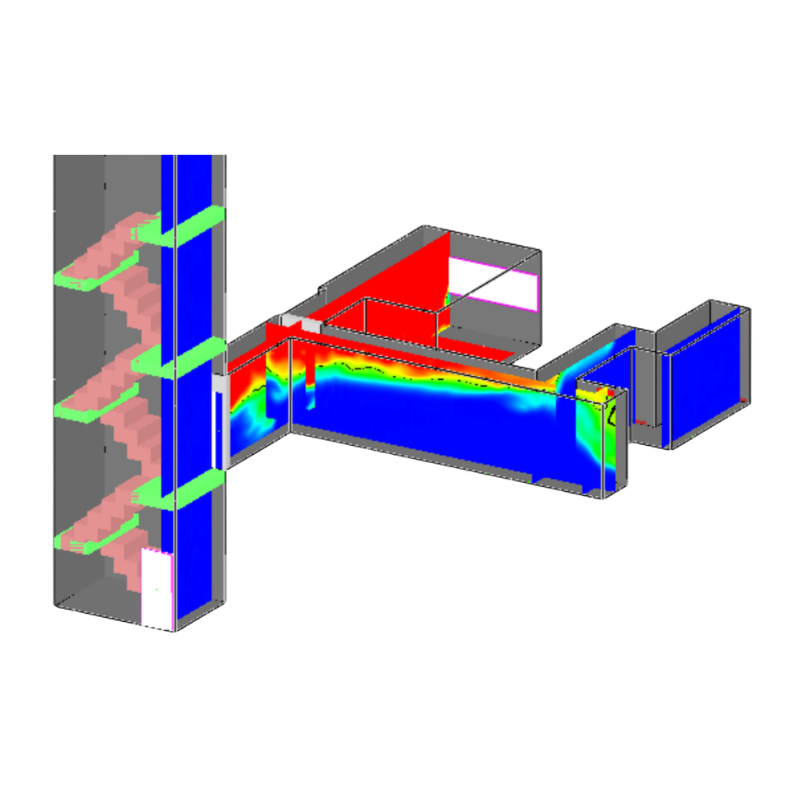
We utilise advanced CFD (Computational Fluid Dynamics) smoke modelling to simulate realistic fire scenarios, assess risk zones, and optimise safety measures. This technology helps us design effective fire protection systems that not only protect occupants but also comply with local regulations and industry standards.
Through comprehensive fire audits, we provide actionable insights that enhance compliance with fire safety standards. By collaborating closely with developers, architects, and local authorities, we deliver seamless, code-compliant solutions that ensure long-term resilience and optimal building performance.

FIRE ENGINEERING AND SURVEYING
Osborn Associates has full in-house Fire Engineering and Fire Surveying teams with extensive experience across a wide range of sectors, including residential, education, manufacturing, healthcare, commercial, industrial, and transport. Our dedicated Fire Engineering and Fire Surveying teams are committed to delivering exceptional service and ensuring compliant designs for our clients.
Fire Engineering (Projects); Client Representation, Fire Safety Scoping, Fire Strategies for Compliance, Negotiation of Code Approval, Sprinkler Systems Design, Smoke Ventilation Design, Project Technical Oversight, Construction Stage Fire Risk Assessments, Construction
Stage Fire Safety Audits.
Fire Engineering (Consultancy); CFD Modelling, Heat Transfer Analysis, Material Testing and Analysis, Fire Compliance Studies, Fire Investigations, Structural Assessments, Fire Systems Technical Evaluation, Inspection Services.
Fire Surveying; External Wall Systems (EWS1 and FRAEW), Fire Risk Assessments, Fire Doors, Fire Stopping, Compartmentation, Fire Loss Evaluation and Support, Fire Systems Condition.
Design Capabilities
Osborn Associates is a multidisciplinary design consultancy specialising in the following disciplines:
Fire Systems Design
Osborn Associates is an expert fire engineering consultancy with experience in a multitude of
different active and passive fire protection systems and processes, including:
CFD Modelling
Osborn Associates Fire Engineering team is fully trained and experienced in CFD modelling techniques, utilising the latest globally recognised software to simulate a range of fire safety events.
The modelling scenarios that the company can undertake include; egress modelling and people movement, smoke modelling in the event of a fire, functionality confirmation of smoke ventilation systems, thermal heat transfer throughout a structure and simulating structural failure due to fire/heat.
Where required to benefit the outcome of a defined scenario by providing more informed data, Osborn Associates will recommend a CFD model is created and the outcome explained within a resulting technical report. Further consultation can also be provided to support the building code approval process, in relation to the modelling provided, including presentations with video clips.
Osborn Associates strives to continually update its working practices to integrate emerging technologies in this field, aiming to provide more concise and usable data for the benefit of the construction project. Often, such outcomes will tailor the overall fire safety approach to achieve a more affordable and/or pragmatic solution
Fire Surveying
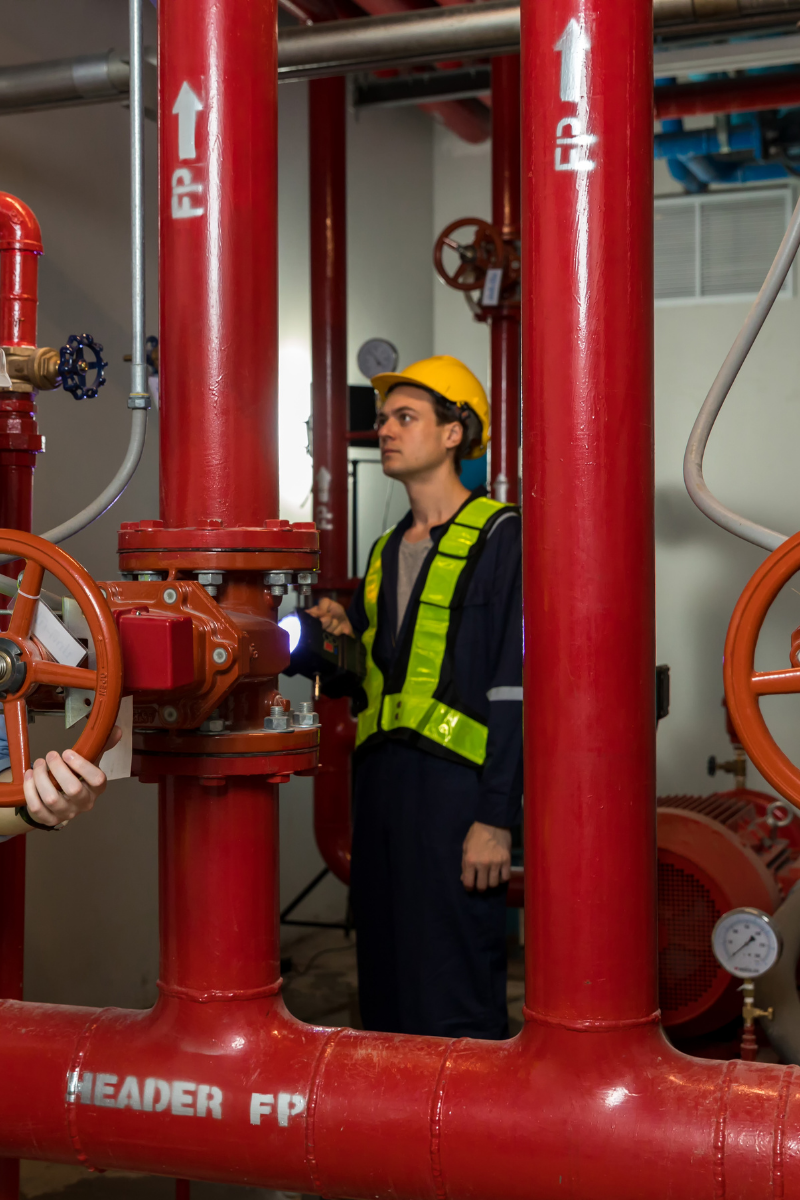
The Osborn Associates Fire Surveying team is fully trained, qualified, and experienced, providing exceptional inspection services across all sectors and project types. With regional locations throughout the UK, the team is available at short notice. Additionally, planned international appointments are undertaken throughout Europe and worldwide, leveraging the team’s deep knowledge of international standards and construction codes.
Unlike many competitors, the company offers a fire safety oversight role throughout the construction and commissioning stages of a project. This ensures compliance with designs, quality of construction works, and the use of suitable materials with the correct certification. Inspections occur periodically during the programmed construction stage, with a report provided after each visit. This report captures construction elements with photographic images before they are enclosed, lists all items of snagging, and witnesses the testing and commissioning of fire systems to ensure full functionality as intended by our suitably experienced fire engineers. The appointment concludes with the provision of an encompassing project report that confirms compliance with designs and material selections, including a selection of photographic images.
Periodic inspections for matters of fire safety can capture any defects, such as fire doors, fire stopping, fire system functionality, and dilapidations. Building owners can commission specific studies as part of a seller’s pack to identify compliance in case any aspect of fire safety is questioned or as a matter of good fire safety housekeeping.
Technical support for external cladding schemes can be provided from the concept design stage through to completion, with regular site inspections capturing construction activities before concealment. Technical evaluations, following approved approaches such as EWS1 and FRAEW, are conducted by a specialist group within the team, all of whom are qualified and fully familiar with all aspects of the subject.
Fire Risk Assessments are provided by a knowledgeable and reliable team of surveyors to a high standard, either on a framework appointment or an individual basis.
Sector Experience
Osborn Associates has a wide range of sector experience
What our clients say
Trusted by Leading Organisations Across the UK





















Frequently Asked Questions
What is Fire Engineering, and why is it important?
Fire engineering is a performance-based approach to fire safety that applies engineering principles to assess, design and justify fire safety measures within a building. It is typically required where prescriptive guidance cannot be followed, or where a more flexible, efficient design solution is needed.
How does fire engineering differ from standard fire safety design?
Unlike prescriptive fire safety design, fire engineering allows solutions to be tailored to the specific building, use and risk profile. This approach can provide greater design flexibility while still meeting life safety and regulatory requirements.
Do fire engineered solutions comply with UK Building Regulations?
Yes. Fire engineered solutions are developed in accordance with UK Building Regulations and relevant British Standards. All strategies are supported by clear technical justification for review by building control bodies and approving authorities.
When should a fire engineer be appointed on a project?
A fire engineer should ideally be appointed at the early design stage. Early involvement allows fire safety considerations to be integrated into architectural and MEP design, reducing redesign, delays and unnecessary construction costs later in the project.
Can fire engineering help reduce construction costs?
In many cases, yes. By adopting a performance-based approach, fire engineering can remove the need for overly conservative prescriptive measures, resulting in more efficient layouts, reduced material requirements and improved buildability.
Will a fire engineer liaise with building control and approving authorities?
Yes. As part of the fire engineering service, we regularly liaise with building control bodies, fire authorities and other approving stakeholders to support the review and approval of fire strategies. Clear technical justification and collaborative engagement help streamline approvals and reduce the risk of delays during design and construction.
What types of buildings typically require fire engineering input?
Fire engineering is commonly required for complex or non-standard buildings such as high-rise residential developments, commercial offices, mixed-use schemes, industrial facilities and buildings with large or unusual occupancy profiles. It is particularly valuable where prescriptive guidance does not adequately address the design intent.
Can fire engineering support alternative or innovative building designs?
Yes. Fire engineering enables alternative design solutions to be assessed using performance-based methods. This allows innovative architectural layouts or construction methods to be developed while maintaining compliance with life safety and regulatory requirements.
What deliverables are typically provided as part of a fire engineering service?
Fire engineering services typically include fire strategies, technical reports, CFD smoke modelling outputs where required, design reviews and construction-stage support. Deliverables are tailored to the project scope and approval requirements.
How can I get in touch with Osborn Associates?
You can contact us through our website's "Contact Us" page, which provides details for our offices in the UK.
Head Office
South Barn
Crockham Park
Edenbridge
Kent TN8 6SR
UK South West
Building 1000
Lakeside
North Harbour
Portsmouth PO6 3EN, UK
UK London
201 Borough High Street
London, SE1 1JA
UK North West
Suite 301, Orega Tootal Building,
Broadhurst House,
56 Oxford Street,
Manchester, M1 6EU
Scotland
Suite 12,
Kollaborate House,
19-21 Gordon Street, Glasgow,
G1 3PL
Copyright © 2024 Osborn Associates Ltd. Company Reg. 02935660. Website design and development by Osborn Online.